Business
AfCFTA Scribe Mene: IP Protocol Key to Africa’s Industrial Growth, Pharma Self-Reliance
African Continental Free Trade Area Secretary-General Wamkele Keabetswe Mene says the newly adopted AfCFTA Protocol on Intellectual Property Rights is more than a legal document, calling it a tool to drive industrial development and improve public health across Africa.
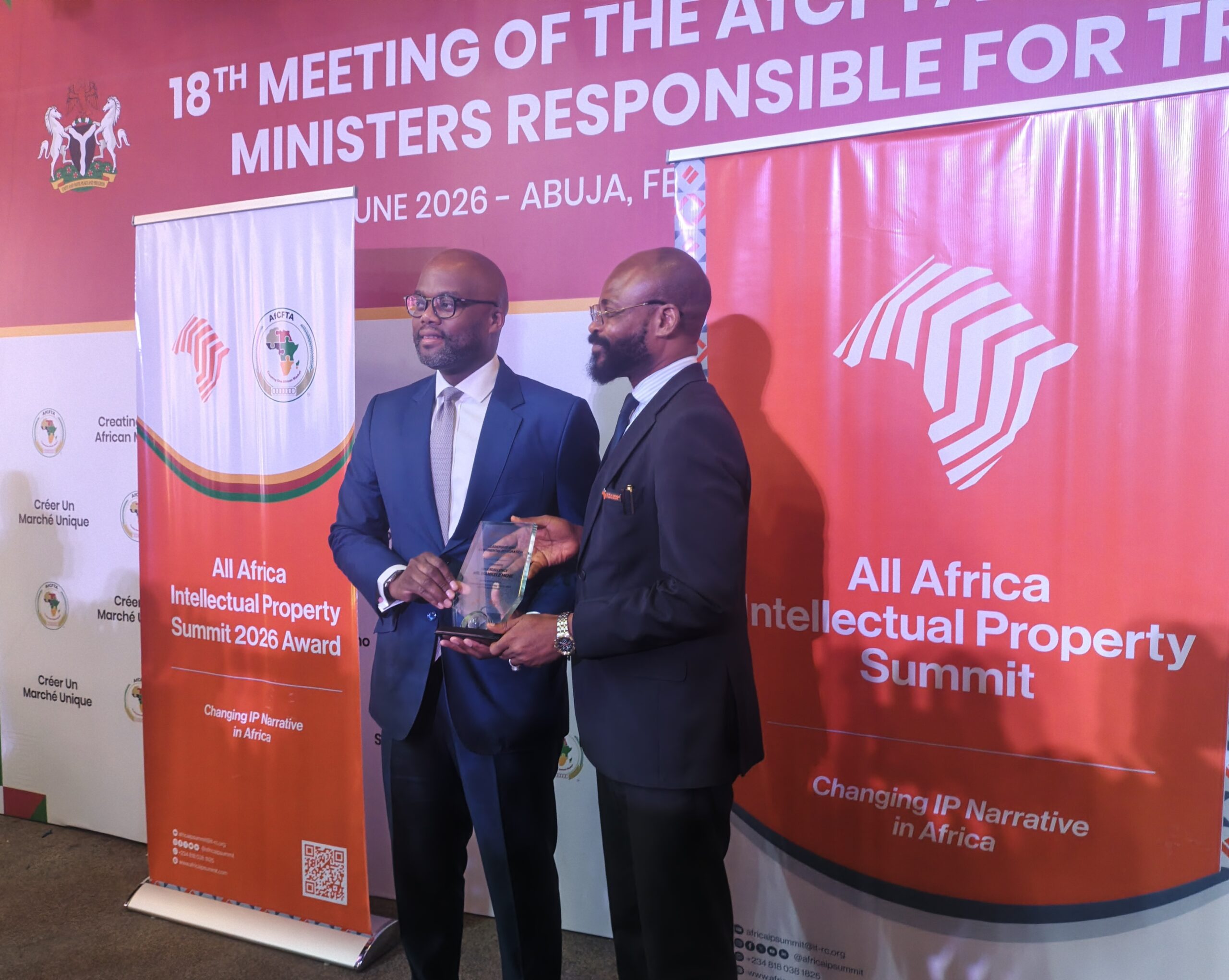
Speaking to journalists in Abuja after receiving an award, Mene described public service as “an honor” and “a duty,” adding that he is “very privileged to be in this position of being your servant.”
“Public service is an honor, public service is a duty, and I am very, very privileged to be in this position,” Mene said. “There is not a single day that goes by that I don’t recognize the duty, as well as the privilege to serve you, Africans, across the length and breadth of our continent.”

Mene tied his work to the vision of Africa’s founding leaders in May 1963 and the Abuja Treaty, noting that he is “deeply rooted in the ambition” of the continent’s integration journey. “As a pan-Africanist, I am very, very honored and very proud that I have the opportunity to contribute to the integration of our continent, standing on the shoulders of our founding mothers and fathers,” he said.
*IP Protocol and Industrial Development*
Mene highlighted the AfCFTA’s partnership with the All-Africa Intellectual Property Summit, saying collaboration will deepen now that the Protocol on Intellectual Property Rights and its annexes have been adopted.
“It is not just a legal instrument. The protocol on intellectual property rights is an opportunity for us as a continent to use intellectual property to advance our industrial development,” he said. He added that the protocol can also enhance public health by using patents, trademarks and other tools to boost local production of pharmaceuticals and cut Africa’s reliance on imports.
On implementation, Mene confirmed that all AfCFTA protocols are concluded and the focus has shifted to execution. He cited $220 billion in intra-Africa trade in 2024 and over 10,000 certificates of origin issued as signs that “implementation is moving.”

“We have to accelerate implementation. We have to accelerate the collaboration with the private sector because it is the private sector that will ensure that we see the benefits of this agreement,” Mene said. He expressed confidence that under the leadership of heads of state and ministers, “we will continue to take giant steps in the implementation of this agreement.”
Sand Mba Kalu, Chairman of the African Committee of the All-Africa IP Summit and Executive Director at Africa International Trade & Commerce Research, said the summit’s vision is to “change IP narrative in Africa to ensure that IP works for Africans.”
“We strongly believe that AfCFTA is the platform that Africa can leverage to trade more with itself, but we cannot trade more with ourselves if we don’t own what we trade,” Kalu told journalists. He noted that the summit has convened practitioners and policymakers for over seven years to address ownership of African products.
“If AfCFTA that promotes trade and investment in Africa does not put in place the system and mechanism for us to protect what we own, it would be a challenge. And that’s what All-Africa IP Summit will do,” he said.
Kalu announced that this year’s South Edition of the summit will be held in Nairobi, Kenya, in collaboration with AfCFTA to mainstream implementation of the IP Protocol. The theme is “Mainstreaming IP for African Trade, Industrialization and Climate Transformation.