

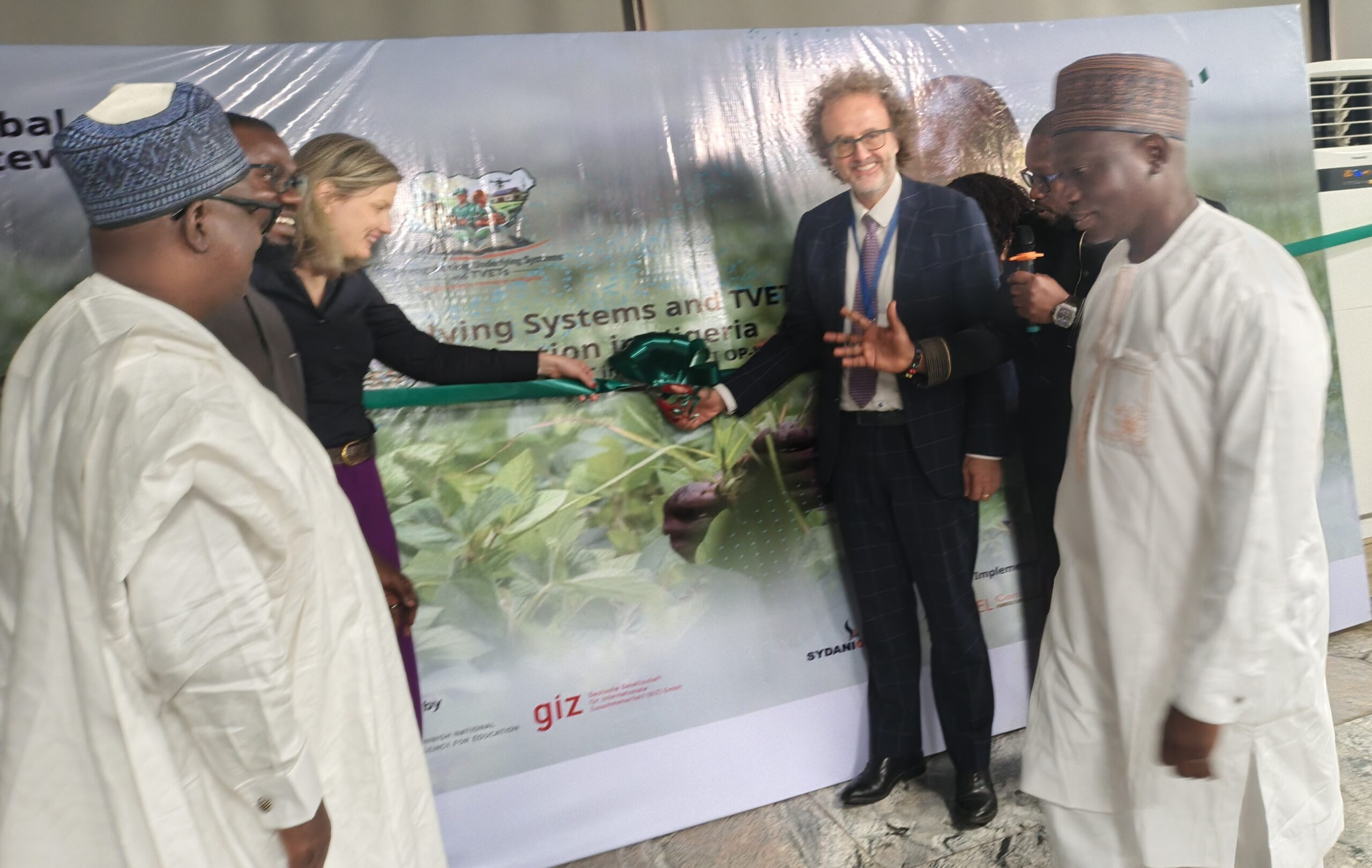
_Team Europe, Sydani Group, FG, and private sector align on agribusiness skills overhaul_
Nigeria’s agribusiness sector is set for a major skills upgrade as stakeholders launched the _Strengthening Underlying Systems and TVETs for Agribusiness Innovation in Nigeria (SUSTAIN) Project_ and inaugurated its Steering Committee in Abuja on Monday, June 15, 2026.
The €-funded initiative under the Team Europe Initiative Opportunity-Driven Skills and VET in Africa (TEI OP-VET) will focus on Niger, Kaduna, and Oyo States. Sydani Initiative for International Development (SIID) is the lead implementing partner.
SUSTAIN Project Director, Andikan Ibanga said the project’s primary beneficiaries will be students, professionals, young entrepreneurs, and women who will be trained in industry-aligned agribusiness skills. Small business grants and job placement support are also built into the program.
“The most important result is increased jobs. We want to create more jobs in the sector. We’re targeting close to 2,000 plus people employed in different agribusiness value chains across the country,” Ibanga said shortly after the launch.
He added that 5 accredited training institutions will be supported. Three will receive facility upgrades while all five will train lecturers and staff to deliver the new demand-driven agribusiness curriculum. The National Board for Technical Education (NBTE) is a key partner, receiving technical assistance for curriculum review and delivery.
“We’re revising curricula based on labour market needs and creating structured pathways to employment through apprenticeships and job placements,” Ibanga noted. A major deliverable, he said, is stronger public-private partnerships, with government, industry, and academia now “sitting at the same table to make decisions.”
The CEO of Sydani, Sidney Simpson represented by Mr. Sunday Atobatele revealed that SUSTAIN will prioritize Industry demand-driven agribusiness skills with youths and women inclusion in bridging the gap.
He emphasized that SUSTAIN focus is to enhance employability and empowerment in the agribusiness sector through modernized training to add value to the sector.
Dr. Andrea Ruediger, Cluster Coordinator, Transformation of Agri-Food Systems, GIZ Nigeria & ECOWAS, said SUSTAIN builds on over 50 years of German cooperation in Nigeria and GIZ’s current portfolio of 13 agri-food projects across 21 states.
“SUSTAIN is about equipping people with the skills and opportunities needed to drive sustainable transformation in the agri-food sector,” she said. She cited FAO data that agriculture contributes ∼28% of Nigeria’s GDP and employs 40% of the labour force, calling the skills gap “a national economic imperative.”
SUSTAIN is co-funded by the German Federal Ministry for Economic Cooperation and Development and the European Union, and jointly implemented by Enabel, GIZ, Expertise France, and Finland’s EDUFI.

The EU Ambassador Massimo De Luca said the project aligns with the EU’s Global Gateway strategy to build partnerships with Nigeria. He highlighted opportunities to connect SUSTAIN with existing EU-backed value chains in dairy, cocoa, ginger, and tomatoes.
De Luca stressed on three priority areas which are climate-resilient agriculture and agroforestry, soil health – “if you’re not familiar with soil health principles, you’re likely to make a loss” – and “traceability from farm to fork,” which he said Nigerian exporters and consumers will increasingly demand.
He also flagged access to finance as a bottleneck and said the EU works closely with development banks to address it.
He announced that the EU-Nigeria Business Forum will hold on July 5 at the National Theatre, Lagos, as another platform to drive investment in agribusiness.
Prof. Usman Ibrahim, Provost, Samaru College of Agriculture, ABU, and immediate past President of the Agricultural Society of Nigeria, welcomed the project. Drawing from 10 years in the private sector before joining academia, he said the college’s agribusiness department, launched 3 years ago, now aligns with industry needs.
“We are fully committed 100%. We will give all our support to ensure future graduates from this institution meet the reality of what industry needs,” he said, citing existing partnerships with CICU, Premier Seeds, and others.
The event also saw goodwill messages from NBTE Executive Secretary Prof. Idris Mohammed Bugaje and representatives of the Federal Ministries of Education and Labour & Employment.
SUSTAIN begins implementation this week. Stakeholders say success will be measured not just by trained graduates, but by jobs created, businesses launched, and stronger linkages between TVETs and the agribusiness sector.