

Political parties in Nigeria have been urged to strengthen their internal structures, enforce discipline and embrace zero tolerance for corruption as the country prepares for the 2027 general elections.
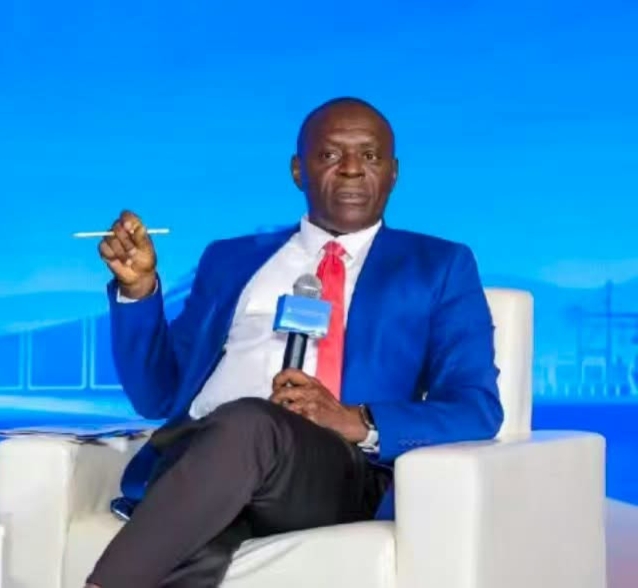
Dr. Austin Maho made the call while presenting a paper titled “Nigeria’s 2027 Polls: Promoting Party Organisation, Discipline and Anti-Corruption — Lessons from Xi Jinping’s Thought” at the DICAN International Stakeholders Engagement Forum on Anti-Corruption, Party Building and Democratic Governance in Abuja on Wednesday.
Maho said Nigeria’s democratic development depended largely on the ability of political parties to build strong institutions driven by clear ideologies, internal discipline and accountability rather than personalities and electoral ambitions.
He argued that most Nigerian political parties function largely as election platforms rather than organised institutions, noting that many lack functional grassroots structures, credible membership registers and effective disciplinary mechanisms.
Drawing lessons from China’s Communist Party under President Xi Jinping, Maho highlighted the importance of organisational discipline, internal accountability and sustained anti-corruption measures in building strong political institutions.
He explained that Xi Jinping’s philosophy of party building was anchored on the principle that a political party must first govern itself effectively before it can successfully govern a country.
According to him, the Chinese model demonstrates how political organisation, discipline and integrity can contribute to national development.
Maho identified political unity, zero tolerance for corruption and strong organisational structures as three major principles underpinning Xi’s approach to party administration.
He noted that discipline within the Chinese Communist Party was sustained through structured grassroots organisations, regular political education, performance evaluation and enforcement of established rules.
To illustrate the importance of personal discipline, Maho narrated an encounter with a Chinese journalist and Communist Party member during a recent visit to China.
He said that when they met at a hotel bar in Beijing, his friend declined an offer of alcohol and opted for tea because he had driven himself to the venue.
According to Maho, the journalist explained that drinking alcohol and driving could constitute a serious disciplinary offence capable of costing him his membership of the Communist Party.
.
Maho said the experience demonstrated that genuine discipline was not about behaving appropriately only when authorities were watching but about maintaining personal integrity even when nobody was monitoring one’s conduct.
.
He described the experience as a lesson in accountability, saying Nigeria needed political leaders and party members who were guided by the fear of dishonour rather than merely the fear of law enforcement agencies.
.
Comparing the Chinese experience with Nigeria’s political environment, Maho observed that while the Communist Party prioritised organisational development before electoral considerations, many Nigerian parties focused primarily on winning elections.
He identified weak membership structures, indiscipline and the absence of consistent consequences for misconduct as major challenges confronting political parties in the country.
The paper outlined three major lessons Nigerian political parties could adopt ahead of the 2027 elections.
On grassroots organisation, Maho called for functional party structures at ward, local government and state levels, stressing that political parties must maintain credible membership registers, regular meetings and active secretariats throughout the year.
He said party organisation should go beyond campaign posters, rallies and political mobilisation to include leadership training, membership development and effective participation at the grassroots.
According to him, parties with strong grassroots structures would be less vulnerable to manipulation by political godfathers and imposition of candidates.
On internal discipline, he condemned the practice of politicians defecting to other parties after losing primaries, disobeying collective decisions and placing personal interests above party commitments.
He also criticised political officials who allegedly collect money from aspirants only to betray them during party processes.
Maho maintained that discipline should apply equally to governors, ministers, lawmakers and other party leaders, insisting that no individual should be considered bigger than the political organisation.
He further urged political parties to ensure that their campaigns were free from hate speech, vote-buying and electoral violence.
On anti-corruption, Maho called for a genuine commitment to accountability, arguing that political parties must demonstrate integrity within their organisations before promising transparent governance to Nigerians.
He cited China’s anti-corruption campaign, popularly described as the fight against ‘tigers and flies’, explaining that it was designed to ensure that both senior and junior officials were held accountable for misconduct.
He, however, noted that Nigeria’s anti-corruption institutions, including the Economic and Financial Crimes Commission (EFCC), Independent Corrupt Practices and Other Related Offences Commission (ICPC) and Code of Conduct Bureau, needed consistent political support to discharge their responsibilities effectively.
He criticised what he described as selective anti-corruption practices, where political opponents were targeted while allies accused of similar offences were protected.
Maho also challenged political parties to review the cost of nomination forms, arguing that excessively high fees could encourage the dominance of wealthy individuals with questionable sources of funds.
He questioned why nomination forms should cost as much as N50 million or N100 million, warning that such financial barriers could undermine equal political participation and encourage corruption.
Looking ahead to the 2027 general elections, Maho proposed three measures to strengthen political party administration and accountability.
He urged all political parties to establish and publish credible membership registers while ensuring transparent congresses from ward to national levels.
He also recommended the establishment of independent disciplinary committees empowered to sanction members regardless of their political status, with decisions made public.
Additionally, he called for the adoption of an anti-corruption pact requiring all candidates to commit to transparent conduct, with provisions for withdrawing candidates found guilty of corruption and refusing protection to elected officials involved in financial misconduct.
Maho emphasised that Nigeria’s multi-party democratic system was different from China’s political arrangement, but maintained that discipline, integrity and organisational effectiveness were universal principles that Nigerian parties could learn from.
He said the 2027 elections should be seen as an opportunity to redefine the country’s political culture rather than merely determine who occupies elective offices.
.
“An election can change faces, but not the system,” he cautioned.
.
He added that Nigeria needed political parties that remained functional beyond election periods, provided opportunities for young people based on merit and treated corruption as misconduct rather than a political advantage.
.
Maho concluded that building credible political institutions required deliberate efforts towards organisation, discipline and integrity, urging political leaders to place national development above personal ambition.
“Let us build parties worthy of Nigeria. Let us go into 2027 disciplined, organised and clean,” he said.