

By Matthew Otabe
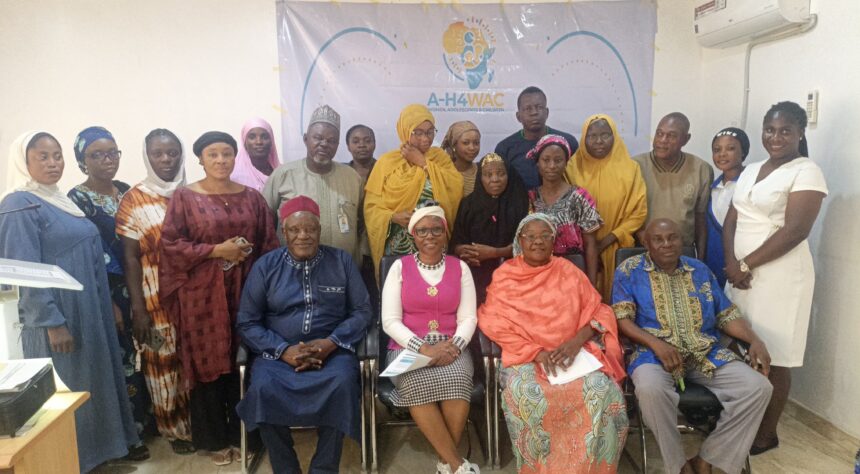
The Advocacy Hub for Women, Adolescents and Children Wellbeing Initiative (A-H4WAC) has trained women and girls’ leaders from Kuje and Gwagwalada Area Councils of the Federal Capital Territory (FCT) on advocacy and communication strategies to improve access to the Basic Health Care Provision Fund (BHCPF).
The one-day training, supported by Rise Up Together, is part of a one-year project aimed at strengthening community-based advocacy and increasing enrolment of poor and vulnerable women and children in the BHCPF programme.
Speaking to journalists on Thursday in Abuja, the Executive Director of A-H4WAC, Adenike Badiora, said the initiative was designed to equip women and girls with the knowledge and skills required to engage policymakers and demand improved access to affordable basic healthcare services.
Mrs. Badiora speaking during the training session
Badiora explained that the organisation conducted a rapid assessment before commencing the project to identify factors preventing vulnerable women and girls from enrolling in the BHCPF programme in the two area councils.
She identified the short enrolment period, the requirement for a National Identification Number (NIN), and the distance between communities and enrolment centres as major barriers.
According to her, many vulnerable women lack NIN, making it difficult for them to complete the registration process, while others cannot afford transportation costs to access designated enrolment centres.
She also disclosed that some existing enrolment centres lack basic facilities to accommodate registration officers, thereby limiting the duration of their operations and the number of people they can register.
To address these challenges, Badiora said A-H4WAC was working with the FCT Health Insurance Authority and the relevant department of the Primary Health Care Board to examine enrolment data and develop practical recommendations for improving access.
She said findings from the community assessment indicated the need to decentralise enrolment centres and bring registration services closer to residents.
The communities also recommended collaboration between enrolment officers and the National Identity Management Commission (NIMC) to enable women without NIN to obtain their identification numbers during registration exercises.
Badiora further appealed to area council authorities to provide temporary canopy structures at enrolment centres to enable registration officers to work in comfortable conditions and remain at the centres longer.
She explained that the advocacy training was necessary to prepare women and girls, who are directly affected by the challenges, to effectively present their concerns and recommendations before policymakers, particularly area council chairmen.
“The women and girls are the ones affected by these issues. We want to build their capacity and ensure they understand the challenges and know how to present them before policy stakeholders,” she said.
Badiora noted that the project currently covers only Kuje and Gwagwalada because of funding limitations, but expressed optimism that its findings and recommendations would be shared with other stakeholders for possible replication across the remaining four area councils of the FCT.
She said A-H4WAC would also engage the Association of Local Governments of Nigeria (ALGON), FCT chapter, to present the assessment findings and encourage other area council chairmen to adopt the recommendations.
The Executive Director added that the organisation had already shared the findings with its network of civil society organisations working to improve healthcare delivery in the FCT, noting that the existing alliance would help sustain advocacy efforts beyond the project’s lifespan.
She expressed confidence that the training would produce women and girls capable of serving as community spokespersons during advocacy visits to area council chairmen and other relevant decision-makers.
One of the beneficiaries, Hasana Ibrahim, Chairperson of the Women Affairs group in Gwagwalada Area Council, said the training had equipped participants with information and practical knowledge they could take back to their communities and share with other women.
Ibrahim said the participants would use the knowledge acquired to educate their members on the available healthcare opportunities and guide them on how to access relevant services.
Mrs. Badiora responding to questions from the participants
Similarly, Zakari Sharifat Auta, a young girls’ leader from Paiko Ward, Gwagwalada Area Council, said the training had increased her understanding of the benefits of the Basic Health Care Provision Fund, particularly for vulnerable members of rural communities.
She noted that many poor families struggle to afford hospital bills and other healthcare expenses, making the BHCPF an important intervention for improving access to essential health services.
Auta, however, called on the government to expand enrolment opportunities to enable more vulnerable people to benefit from the programme.
She also urged women and other community members to take advantage of future enrolment exercises by cooperating with registration officials and making themselves available for registration.
The initiative is expected to strengthen grassroots participation in health policy advocacy and promote greater inclusion of vulnerable women and girls in Nigeria’s basic healthcare financing framework.