

By Matthew Denis
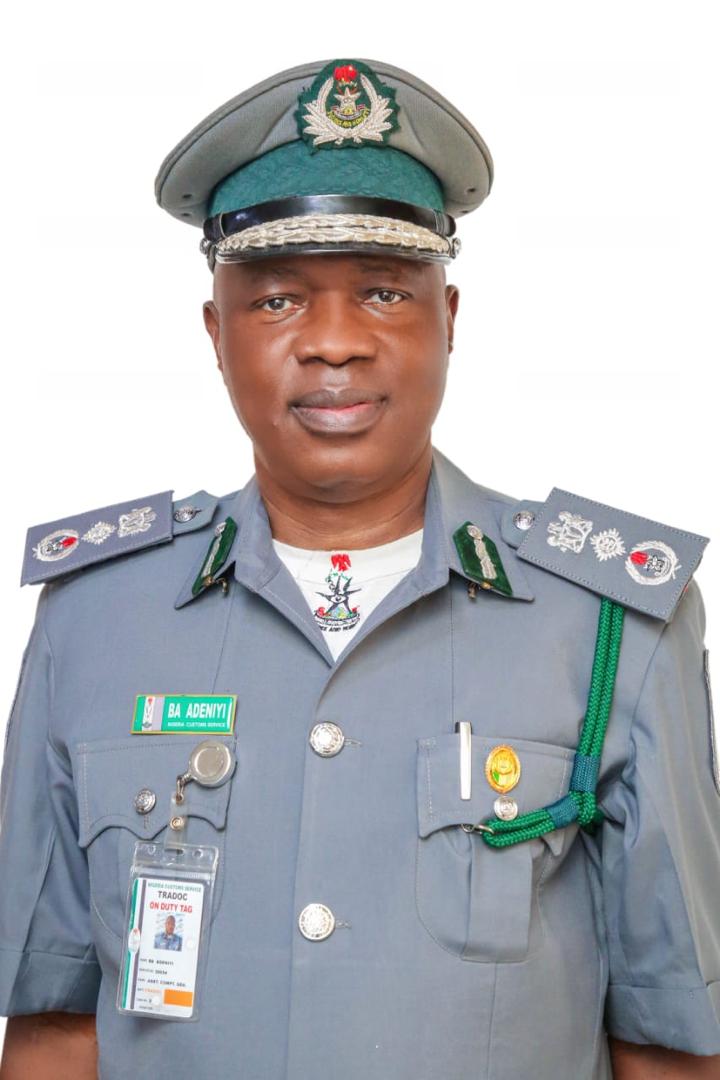
The Comptroller-General of the Nigeria Customs Service (NCS), Bashir Adeniyi has called for stronger discipline, professionalism, accountability and intelligence-driven enforcement within the Service, stressing that effective customs administration requires balancing trade facilitation with the fight against illicit trade.
The Comptroller-General made the call while addressing participants at a conference organised by the Customs Police Unit (CPU), where he emphasised the need for the Service to learn from its history, respond effectively to present challenges and prepare for emerging threats.
He said the conference theme, “Learning from the Past, Responding to the Present and Preparing for the Future,” challenged the Service to reflect on three critical questions: where it was coming from, what the present demanded and the direction it must take to remain relevant and effective.
The CGC expressed appreciation to President Bola Ahmed Tinubu for his sustained support for the modernisation of the Nigeria Customs Service, while acknowledging the contributions of the management, Acting Provost, officers and men of the Customs Police Unit, sister agencies and other stakeholders.
Speaking in his capacity as Comptroller-General and Chairman of the relevant Customs Police Unit oversight structure, he said the Customs Service could only facilitate legitimate trade and suppress illicit activities effectively when supported by a disciplined, professional and trusted enforcement unit.
He recalled that customs administration in Nigeria dated back to 1891, while preventive enforcement arrangements were established in 1945. The Customs Police Unit, however, was inaugurated in 2019 with the mandate to investigate personnel-related offences, prevent crime and ensure compliance with established rules and regulations.
According to him, the founding principle of the unit remains that no officer is above the law.
He commended the Acting Provost and personnel of the unit for their contributions towards building its capacity over the past seven years.
Reflecting on the lessons of history, the CGC identified integrity, restraint and collaboration as essential principles guiding effective customs enforcement.
He maintained that the Service must demonstrate integrity internally before demanding compliance from traders and members of the public.
He also cautioned that the extensive enforcement powers granted under the Nigeria Customs Service Act, 2023, must be exercised responsibly, stressing that every search, arrest and detention must be supported by lawful authority and withstand public scrutiny and judicial review.
The Comptroller-General further observed that enforcement without consultation and collaboration was unlikely to deliver sustainable results.
He cited initiatives such as the One-Stop Shop as examples of how enforcement and stakeholder engagement could complement each other in addressing operational challenges.
He noted that criminal networks had become increasingly sophisticated, exploiting the same trade routes used by legitimate businesses to traffic firearms and their components, narcotics, counterfeit medicines, protected wildlife and illicit financial flows, often through digital channels.
He therefore urged the Service to adopt smarter, technology-driven approaches rather than relying solely on conventional enforcement methods.
The CGC identified several modern customs instruments, including the SAFE Framework of Standards, the Authorised Economic Operator programme, advance rulings and Time Release Studies, as important tools for encouraging compliance, improving efficiency and enabling officers to concentrate on high-risk transactions.
He explained that these mechanisms would also reduce opportunities for corruption, abuse of discretion and other forms of misconduct.
On technology and intelligence gathering, he highlighted the importance of the Service’s digital platforms, data management systems and the data centre at Customs Headquarters in strengthening risk assessment, audit trails and access to global criminal intelligence databases.
He said the Nigeria Customs Service Act, 2023, also provided the legal framework for intelligence-led operations, joint border operations and mutual administrative assistance.
According to him, the Customs Police Unit occupies a strategic position in the implementation of these initiatives by ensuring that enforcement discretion is exercised lawfully and that successful interceptions translate into credible investigations and prosecutions.
Adeniyi stressed that integrity must remain the guiding principle of the unit, adding that customs officers must consistently balance trade facilitation with control, enforcement with fairness, and authority with accountability.
Outlining the way forward, the Comptroller-General identified three strategic pillars for strengthening the Customs Police Unit: consolidation, collaboration and innovation.
He explained that consolidation involved transforming established good practices into lasting institutional standards through clear procedures for arrests, detention and investigations, effective case-file management and continuous professional development from recruitment to leadership.
On collaboration, he called for stronger working relationships with the Nigeria Police Force, Armed Forces, National Drug Law Enforcement Agency (NDLEA), National Agency for Food and Drug Administration and Control (NAFDAC), Department of State Services (DSS), Independent Corrupt Practices and Other Related Offences Commission (ICPC), Economic and Financial Crimes Commission (EFCC), Nigerian Agricultural Quarantine Service and other relevant stakeholders.
He said no single institution could successfully defeat illicit trade without effective partnerships and sustained cooperation with border communities and other stakeholders.
On innovation, he urged the adoption of artificial intelligence, advanced scanners, geospatial tools and electronic cargo tracking systems to improve investigations, intelligence gathering and operational efficiency.
However, he cautioned that technology must operate within the law, noting that while algorithms could help identify risks, enforcement powers must remain subject to human oversight, accountability, data protection and established legal procedures.
He warned that consolidation without innovation could lead to stagnation, while innovation without consolidation could create disorder, stressing that both required collaboration to achieve meaningful results.
The CGC urged participants at the conference to develop practical recommendations, including a comprehensive customs doctrine anchored on the Nigeria Customs Service Act, 2023, and the revised Arusha Declaration.
Other expected outcomes, he said, should include operational protocols for joint operations, evidence management and information exchange, responsible guidelines for using data and artificial intelligence in investigations, as well as recommendations on training, welfare and recognition of Customs Police Unit personnel
He also called for a review of some of the unit’s original operational responsibilities introduced in 2019, particularly those relating to the monitoring of containers in transit.
According to him, advances in technology have provided better tools for monitoring cargo movements, making it necessary for the unit to reassess its earlier approaches and identify areas where technological developments could improve operational effectiveness.
He charged officers and men of the Customs Police Unit to preserve what was working, correct existing weaknesses and develop new strategies to address emerging challenges.
He reminded them that the uniform they wore represented the trust of Nigerians and the reputation of the Nigeria Customs Service, urging them to uphold the highest standards of discipline, professionalism and integrity.