The Live Above Poverty Organisation (LAPO) has called on the Federal Government, state governments, development partners and the private sector to increase investment in water, sanitation and hygiene (WASH) facilities in Nigerian schools to improve children’s health, dignity and learning outcomes.
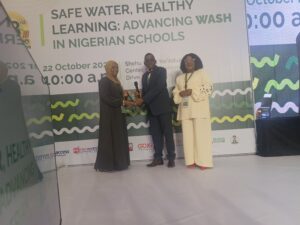
The call was made at the 33rd Annual LAPO Development Forum, which focused on the theme, “Safe Water, Healthy Learning: Advancing WASH in Nigerian Schools.”
Speaking at the forum, the Founder of LAPO, Dr. Godwin Ehigiamusoe, emphasised the need for government to take greater responsibility for providing essential social services, particularly water, healthcare and education, to the majority of Nigerians.
Ehigiamusoe expressed concern over the growing dependence on private providers for essential services, particularly education and healthcare, warning that the profit-driven nature of private sector involvement could have implications for access and affordability.
He urged policymakers to adopt a broader approach to development by prioritising the needs of ordinary citizens, especially those in underserved communities.
According to him, access to clean water remains a major challenge in many communities, where residents depend on boreholes without adequate water treatment facilities.
He noted that while wealthier households might afford water treatment systems, poorer communities often lack access to safe drinking water.
The LAPO founder stressed that government must ensure that essential services are accessible to the wider population, rather than leaving citizens to rely entirely on private providers.
“Government should be concerned about health, water and education for the largest number of citizens,” he said.
Earlier, the President of LAPO, Faith Negbe Osazuwa-Ojo, said the annual development forum had, for more than three decades, provided a platform for policymakers, government officials, corporate leaders and other stakeholders to discuss national challenges and develop practical solutions.
She described this year’s theme as a call to action to address the persistent lack of adequate water, sanitation and hygiene facilities in Nigerian schools.
Citing findings from the 2021 WASH National Outcome Routine Mapping report, published in 2022, Osazuwa-Ojo said only 37 per cent of schools in Nigeria had access to basic water supply, while 35 per cent had basic sanitation services and 30 per cent had basic hygiene services, including handwashing facilities with soap and water.
She added that only about half of the schools had dedicated funds for maintaining their WASH facilities.
According to her, the figures reflect the daily challenges faced by millions of Nigerian children who attend schools without clean drinking water, decent toilets or facilities for proper handwashing.
She also highlighted the difficulties faced by female students managing their menstrual health in schools without adequate water, privacy and appropriate disposal facilities.
Osazuwa-Ojo warned that inadequate WASH facilities could expose pupils to preventable diseases, disrupt school attendance and undermine effective learning.
She called on organisations, individuals and other stakeholders to support public and private schools in their communities by helping to provide safe water and healthy learning environments.
“At LAPO, our mission is improving lives, and we believe that every life matters, regardless of age, status or background. Every child deserves to learn in a safe, healthy and dignified environment,” she said.
The LAPO president urged participants to translate the forum’s deliberations into practical actions that would ensure Nigerian children could learn and thrive in healthy environments.
In her remarks, the Chairperson of the LAPO Board, Dr. Oyefemi Margaret Obaze, said despite government efforts and collaborations with local and international partners to improve access to water, sanitation and hygiene, many schools across the country still lacked basic facilities.
She said the situation continued to compromise children’s health, dignity and academic performance.
Obaze stressed that quality education could not thrive where children’s basic needs were unmet, adding that every pupil deserved a learning environment that protected their health and enabled them to reach their full potential.
She urged governments and policymakers to prioritise WASH investments in the education system, backed by adequate funding, effective implementation and sustained accountability.
She also called on school proprietors, administrators and teachers to make hygiene an integral part of school management, while encouraging development partners and the private sector to invest in sustainable WASH solutions for underserved schools and communities.
Obaze further urged parents, traditional rulers, religious leaders and community stakeholders to promote positive hygiene practices and support schools in their localities.
Addressing students, she encouraged them to practise good hygiene, care for their environment and inspire their peers to adopt healthy habits.
“Let this forum move us beyond dialogue to decisive action, where commitment becomes investment, ideas become solutions, and partnerships become measurable impact,” she said.
Obaze subsequently declared the 33rd Annual LAPO Development Forum open, expressing hope that the deliberations would produce practical recommendations for improving school WASH services across the country.
Meanwhile, the Federal Ministry of Education has called for stronger integration of water, sanitation and hygiene into education planning, school budgeting and supervision.
The Director of Sports in the ministry, Mrs. Nnejereka Dorathy, who delivered a goodwill message, commended LAPO and its partners for convening the forum, describing WASH as a multisectoral issue requiring coordinated action.
She said access to safe water, adequate sanitation and proper hygiene was essential to pupils’ health, dignity, school attendance and academic performance.
Dorathy disclosed that the ministry was reviewing the National School Health Policy, originally developed in 2006, to address emerging health and wellbeing concerns affecting learners.
She said the ministry was also working with relevant government agencies, development partners and civil society organisations to strengthen school health programmes and promote healthier learning environments.
However, she identified inadequate water supplies, insufficient sanitation and handwashing facilities, limited funding and poor maintenance as persistent challenges.
The director emphasised that providing infrastructure alone was insufficient unless the facilities remained functional, accessible, inclusive and sustainable.
She urged stakeholders to support the ministry through strategic investments, technical assistance, school WASH assessments, hygiene education and sustainable maintenance systems.
According to her, the success of school WASH programmes should be measured not merely by the number of facilities constructed, but by whether pupils can consistently access safe water, decent sanitation and proper hygiene services.
Also speaking, the keynote speaker, Mrs. Zainab Ibrahim Budah, stressed that improving WASH facilities in schools must go hand in hand with behavioural change and sustained maintenance.
Budah explained that WASH encompasses water, sanitation and hygiene, noting that its benefits could only be fully realised when pupils had access to functional facilities and understood the importance of maintaining proper hygiene practices.
She said pupils should be encouraged to wash their hands before eating and after using the toilet, while schools must provide reliable water supplies, soap and functional handwashing stations.
The keynote speaker also highlighted the importance of menstrual health and hygiene facilities for female students, including access to privacy, water and appropriate menstrual waste disposal systems.
She stressed, however, that WASH interventions should benefit all pupils, including boys and children with disabilities.
Budah warned that poor sanitation and unsafe water could expose pupils to diseases such as cholera, while inadequate facilities could cause discomfort, embarrassment and interruptions to learning.
She further identified inadequate funding, poor maintenance, unequal access between public and private schools, and the gap between hygiene awareness and actual practice as major challenges.
According to her, the existence of toilets or handwashing stations does not necessarily mean that pupils have access to adequate WASH services, particularly when water is unavailable, soap is lacking or facilities are broken.
She therefore called for a comprehensive approach that combines safe water, functional and accessible toilets, handwashing facilities and sustained hygiene education.
Budah noted that effective WASH services could improve school attendance, support girls’ education, promote dignity and reduce disruptions to the learning process.
She added that although WASH alone could not guarantee improved academic performance, it created a healthier environment in which teaching and learning could take place more effectively.
The forum ended with calls for stronger collaboration among government institutions, schools, communities, development partners and the private sector to ensure that safe water, decent sanitation and proper hygiene become standard features of Nigerian schools.