
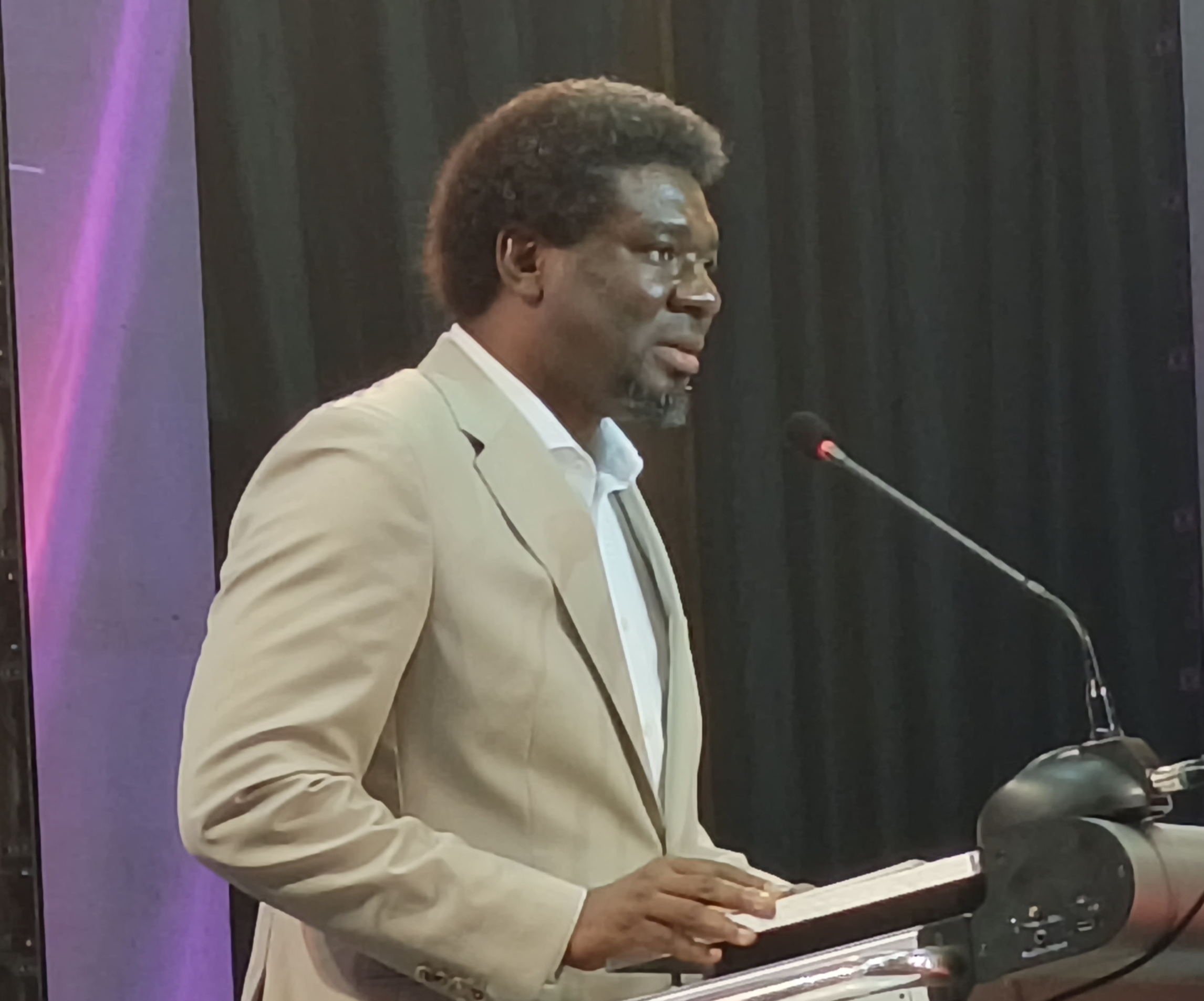
The President of the Petroleum and Natural Gas Senior Staff Association of Nigeria (PENGASSAN), Comrade Festus Osifo, has called for smarter and more predictable regulatory frameworks to attract investment, increase production and promote sustainable growth in Nigeria’s oil and gas industry.
Osifo made the call on Wednesday in Abuja while delivering his opening remarks at the 5th PENGASSAN Energy and Labour Summit, with the theme, “Strengthening Regulatory Frameworks as a Catalyst for Stability and Growth in Nigeria’s Oil and Gas Industry.”
He said the theme was deliberately chosen because the oil and gas industry requires certainty, clear rules and regulatory predictability to attract investments that often have a lifespan spanning several decades.
According to him, investors need clear rules, operators require predictability, workers need protection, host communities need confidence, while government needs sustainable revenue from the sector.
He said, “Regulations must provide oversight without creating avoidable difficulties. What we require is not weak regulation. What we need is smarter regulation.”
Osifo noted that since the maiden edition of the summit in 2022, PENGASSAN had used the platform to examine critical issues affecting the industry, including gas development, downstream deregulation, energy transition, capitalisation, energy security, divestment, artificial intelligence, crude oil taxation, health, safety and environment (HSE), environmental, social and governance (ESG), investment and incremental production.
He said resolutions from previous summits had consistently been presented to government, regulators, operators and other stakeholders, with some recommendations influencing industry conversations, policies and operational decisions.
The PENGASSAN president expressed concern over frequent alterations to Nigeria’s petroleum regulatory framework, saying they could undermine investor confidence and create uncertainty.
He also raised concerns over multiple regulatory institutions and overlapping responsibilities, stressing that operators should not be subjected to repetitive approvals, multiple inspections or conflicting directives.
“Today, we have two principal petroleum regulators created by the Petroleum Industry Act, alongside NOSRA and several other federal and state institutions whose statutory responsibilities affect oil and gas operations.
“The challenge, therefore, is not simply the number of institutions, but how efficiently their mandates are exercised,” he said.
Osifo urged regulators to streamline approval processes and ensure that operators can make long-term investment decisions with greater certainty.
He warned that lengthy approval procedures could discourage investors and delay development plans, final investment decisions and other projects capable of increasing Nigeria’s oil and gas production.

“Capital is mobile, and investors will naturally gravitate towards jurisdictions where there is clarity and efficiency. Our processes must therefore be clear and our system efficient,” he said.
However, he stressed that regulatory efficiency must not come at the expense of safety and environmental standards.
“What we need is smarter regulation—regulation that understands financial realities, embraces technology, eliminates unnecessary duplication and gives investors confidence that the rules will remain stable over time,” he said.
The PENGASSAN president also called for stricter monitoring of expatriate quota approvals, insisting that the policy should not be used to displace qualified Nigerians where local capacity exists.
He acknowledged the contribution of international technology, investment and expertise to the Nigerian oil and gas industry but said every expatriate engagement should ultimately result in greater transfer of knowledge and skills to Nigerians.
“Expatriate quota must never become a mechanism for replacement of Nigerian capacity in areas where local capacity exists,” Osifo said.
He urged regulators and operators to ensure that expatriate quota approvals are justified, properly monitored and linked to measurable local capacity development.
Osifo further stressed the importance of occupational health and safety, environmental protection, local content and operational integrity in the industry.
He declared that the life of a Nigerian worker must never become the price paid for increased production.
“The life of a Nigerian worker must never become the price to pay for increased production. Every worker who leaves home desires to return safely to his or her family,” he said.
He called for stronger frameworks to support gas processing and the expansion of LPG, CNG and LNG infrastructure, noting that Nigeria’s vast gas resources could support power generation, petrochemicals, transportation and industrialisation.
According to him, Nigeria must move beyond merely recovering lost production to unlocking new resources, attracting fresh capital and sustainably increasing oil and gas output.
‘Government, Labour, Operators Must Collaborate’
Osifo also called for stronger collaboration among government, regulators, operators and labour, saying no single stakeholder could transform the industry alone.
“Government cannot build the industry alone. Regulators cannot do it alone. Operators and employers cannot do it alone. Labour cannot do it alone.
“We need collaboration, accountability, credibility and mutual respect. Without projects, there will be no sustainable jobs. Without production, there will be no revenue. And without safety standards, none of these can endure,” he said.
He maintained that PENGASSAN remained committed to building an industry where both capital and labour could prosper, while promoting employment, productivity, technological advancement, skills development, responsible corporate governance and respect for collective bargaining.
Osifo also called for genuine industrial harmony, stressing that it should go beyond the absence of strikes or disputes.
“True industrial harmony is the presence of justice, mutual respect, effective communication, responsible engagement and shared prosperity,” he said.
The PENGASSAN president disclosed that the association would also use the summit to showcase the impact of the PENGASSAN Foundation, which he said had supported education and community development initiatives across the country.
He said the foundation had built and supported schools and provided assistance to communities, describing its interventions as part of PENGASSAN’s commitment to improving the welfare and development of Nigerians.
Osifo, who is expected to leave office following the association’s National Conference scheduled for August 27, expressed pride in the growth of PENGASSAN and urged members to sustain its tradition of contributing to national development while protecting workers’ interests.
He thanked government institutions, regulators, operators, sponsors, partners, successive PENGASSAN leaderships and members for their contributions to the association’s development.
He said the future of Nigeria’s oil and gas industry depended on collective responsibility, noting that sustainable investment, production, jobs, revenue and safety could only be achieved through cooperation among all stakeholders.